SEO Title Options
-
Primary (CTR & Search Intent): iPhone “Liquid Detected” in Port? Safe Fixes & Drying Timeline
-
Alternative (Troubleshooting Focused): How to Fix an iPhone That Won’t Charge After Water Exposure
Meta Description Options
-
Option 1 (Direct & Practical — 156 characters):iPhone won’t charge after getting wet? Learn what Apple’s Liquid Detected alert means, how to safely dry your Lightning or USB-C port, and what not to do.
-
Option 2 (Action-Driven — 158 characters):Stuck with a “Charging Not Available” moisture alert on your iPhone? Avoid rice and hair dryers. Here is the safe, verified protocol to clear trapped liquid fast.
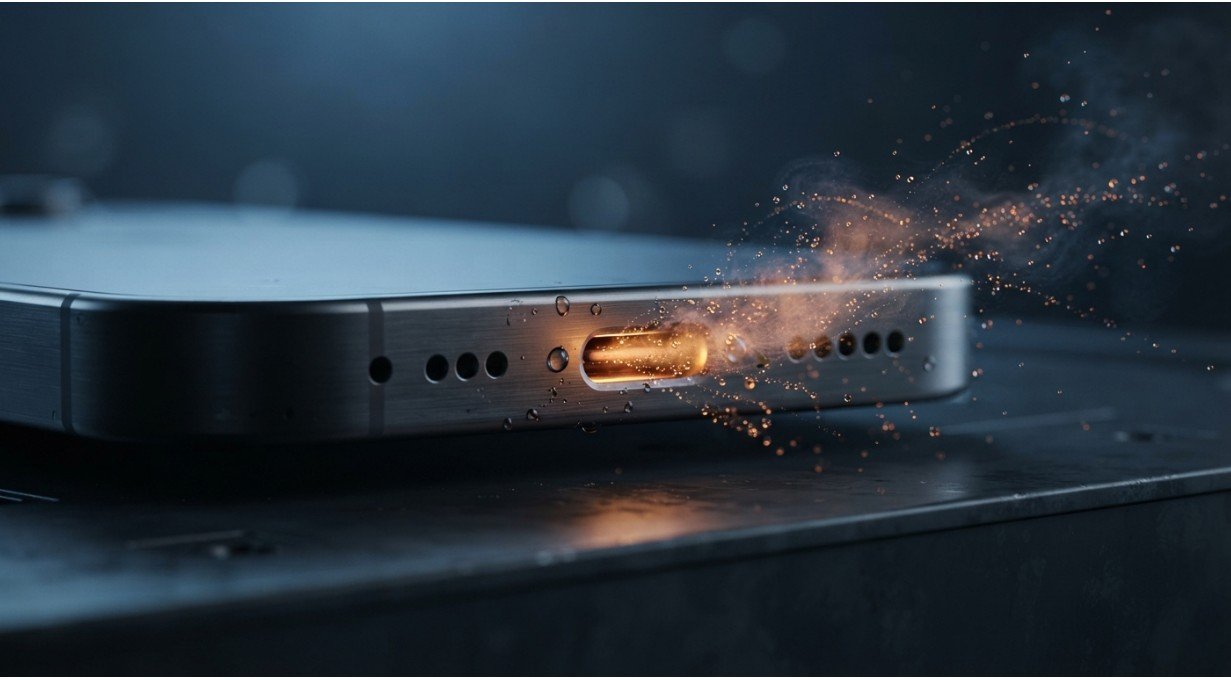
Seeing the yellow alert icon reading “Charging Not Available — Liquid Detected” can trigger immediate panic. However, this popup does not mean your device is ruined.
Starting with the iPhone XS and extending across all modern Lightning and USB-C models, iOS actively monitors electrical conductivity across the port’s internal pins. If moisture connects those pins while live current runs through them, it triggers corrosion or short-circuits. The lockout is an automated shield designed to protect your logic board—not a sign of permanent damage.
Here is the exact procedure to clear trapped moisture safely without damaging your connector pins.
Step 1: Avoid Costly Panic Reactions
When moisture bridges the connector pins, improper drying attempts frequently cause more damage than the water itself:
-
Do not hit “Emergency Override”: Unless your battery is at 1% and you need to call emergency services, bypassing this protection sends live voltage through wet pins, which causes instant pin corrosion and permanent port failure.
-
Never use heat or canned air: Hair dryers melt internal waterproof adhesives and warp connector brackets. High-pressure air cans drive droplets past internal gaskets and deeper into the logic board housing.
-
Forget the bag of rice: Apple officially warns against rice. Starch grains enter the port, hydrate, and swell into a sticky paste that coats the electrical contacts.
-
Don’t insert cotton swabs or paper towels: Cellulose fibers easily snag on micro-pins, trapping water against the metal contacts rather than releasing it.
Step 2: The Physical Removal & Evaporation Process
To clear the port safely, combine gravity with passive airflow:
-
Tap it out: Hold your iPhone vertically with the charging port facing directly toward the floor. Gently tap the bottom edge against your palm to shake loose excess liquid.
-
Set up dry airflow: Place the phone port-down in a well-ventilated area. Positioning the phone a short distance from a small desk fan running on a cool setting drastically speeds up capillary evaporation without applying dangerous heat.
-
Check the adjacent speakers: Water trapped in the bottom speaker chambers often migrates over to the charging port. Run a 165–230 Hz acoustic sweep on your speakers first to blast lingering droplets out through the mesh.
Expected Drying Timelines
Capillary action inside narrow Lightning and USB-C slots takes time to break down. Here is how long you should expect to wait before the sensor resets:
| Exposure Type | Typical Drying Duration | Safe Action |
| Light splash or rain drizzle | 30–60 minutes | Air dry in front of a cool fan. |
| Brief submersion (< 10 seconds) | 2–4 hours | Invert port-down, wait for ambient evaporation. |
| Deep submersion or sink drop | 5–12 hours | Allow overnight drying before connecting a cable. |
| Saltwater or pool chlorine splash | Immediate flush needed | Lightly rinse port with fresh tap water first, then dry 12+ hours. |
Step 3: Safe Workarounds While Waiting
If you urgently need to power your phone while the port dries out:
-
Switch to MagSafe or Qi Wireless Charging: Inductive charging coils run entirely through the rear glass, bypassing the port pins. Simply ensure the glass back of your phone is completely dry before placing it on the charging pad.
-
Power down: If your battery is running critically low and you don’t have a wireless charger on hand, turn the device off completely to halt passive background battery drain until the port clears.
Troubleshooting a Persistent “Liquid Detected” Alert
If the warning persists after 12 to 24 hours of drying, the sensor is likely reacting to trapped debris or residual surface tension:
-
Inspect for wet lint: Compacted pocket lint absorbs water and acts like a wet sponge against the pins. Shine a flashlight into the port; if you see lint clumps, very gently fish them out using a dry wooden or plastic toothpick (never use metal pins or needles).
-
Perform a clean restart: Sometimes the iOS system daemon responsible for pin monitoring fails to clear its cache after moisture has already evaporated. Perform a hard reset:
-
Quickly press and release Volume Up.
-
Quickly press and release Volume Down.
-
Press and hold the Side Button until the screen turns black and the Apple logo appears.
-
If you observe white or greenish residue inside the port cavity, or if the alert persists past 48 hours without any physical moisture present, schedule a hardware assessment at an Apple Authorized Service Provider to evaluate the port module for pin corrosion.